It’s been exactly one year since our divorce.
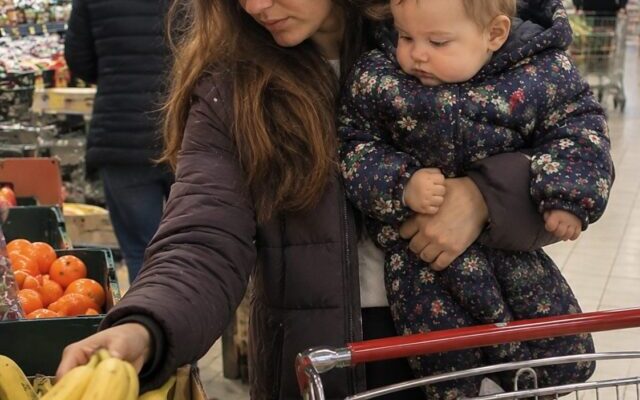
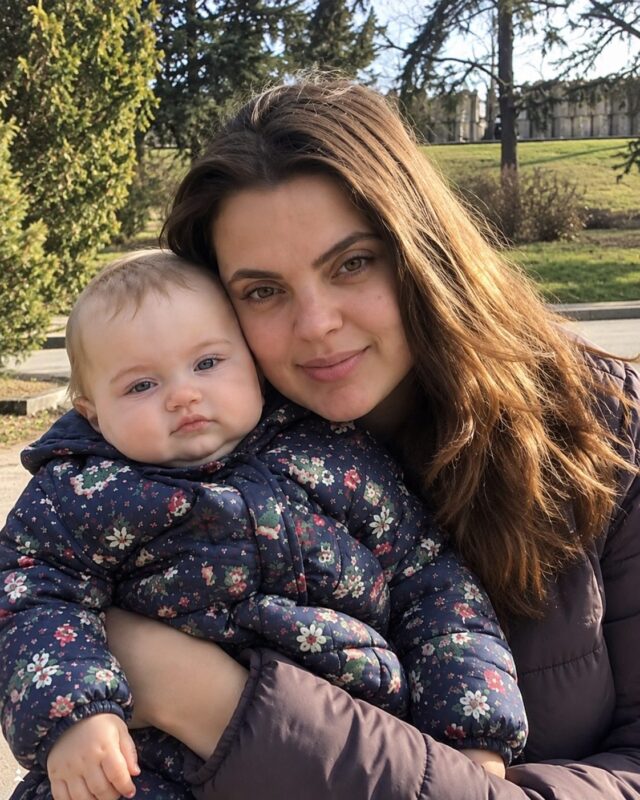
Yesterday, I saw my ex-wife standing outside a supermarket, holding a baby in her arms.
At first, I didn’t recognize her.
The woman I remembered had beautiful brown hair, sparkling eyes, and a laugh that could fill an entire room.
The woman standing before me looked twenty years older.
Her cheeks were hollow, her clothes hung loosely from her shoulders, and her hands trembled as she searched through her purse for a few coins.
But what truly broke me wasn’t her appearance.
It was the little boy in her arms.
He had my eyes.
And when I asked his name, she whispered something that made my blood run cold.
“His name is Lukas. After your father.”
My name is Daniel. I’m forty-three years old.
For twelve years, I was married to a woman named Clara.
We weren’t wealthy, but we had a comfortable home, steady jobs, and dreams of growing old together.
There was only one thing missing.
Children.
After years of unsuccessful treatments, doctors told us that having a baby together was extremely unlikely.
Clara cried for weeks.
I tried to comfort her, but eventually, something inside our marriage began to change.
She became withdrawn. I buried myself in work.
Then my mother, Margaret, started interfering.
“Daniel, you’re wasting your life,” she would say. “Clara can’t give you a family. You deserve better.”
I told her to stop.
But I never stopped listening.
When Clara turned thirty-six, she began experiencing terrible fatigue and frequent dizziness.
She visited doctors constantly.
My mother insisted she was exaggerating.
“She’s trying to keep you feeling sorry for her.”
And slowly, shamefully, I began believing it.
The final argument happened on a rainy Thursday evening.
Clara had prepared dinner and was waiting for me.
When I arrived, she smiled nervously.
“Daniel, there’s something important I need to tell you.”
But I didn’t let her finish.
I’d already made my decision.
“I want a divorce.”
Her smile disappeared.
She stared at me for several seconds.
Then she placed one hand over her stomach.
“Please,” she whispered. “Just listen to me.”
“I’m tired of listening, Clara.”
She began crying.
I walked out.
Three months later, our divorce was finalized.
My mother helped me pack my belongings.
Clara never fought over the house, the furniture, or our savings.
She simply signed the papers.
I thought she’d accepted the end of our marriage.
I had no idea what she’d been hiding.
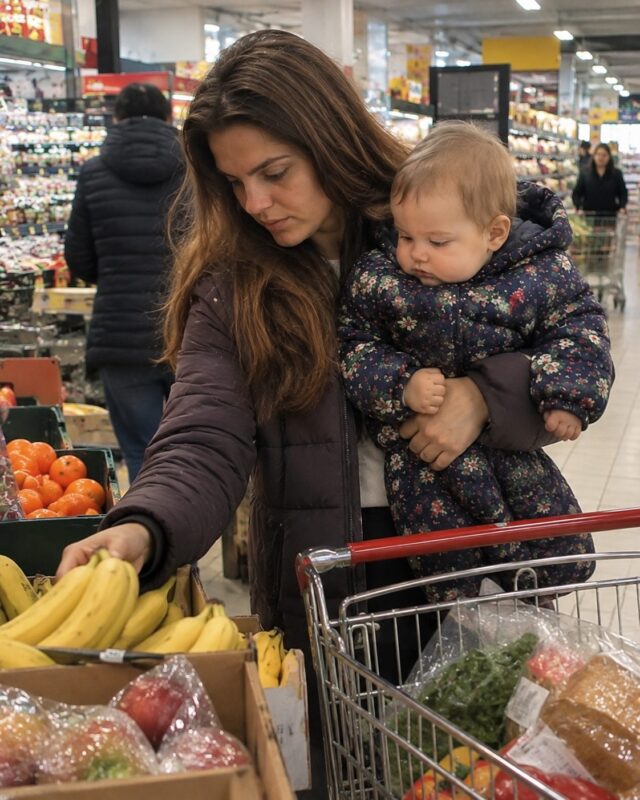
Yesterday afternoon, I was leaving the supermarket when I noticed a woman struggling to lift a bag of groceries while holding a baby.
Something about her seemed familiar.
Then she turned.
“Clara?”
She froze.
For a moment, I thought she might run.
Instead, she lowered her eyes.
“Hello, Daniel.”
I couldn’t stop staring.
She was painfully thin.
Dark circles surrounded her eyes.
Her once-beautiful hair was tied into a messy ponytail.
“What happened to you?”
She forced a smile.
“Life happened.”
The baby began fussing.
She kissed his forehead and whispered, “It’s okay, sweetheart.”
I looked at him.
He couldn’t have been more than a few months old.
“Is he yours?”
She nodded.
“What’s his name?”
“Lukas.”
My heart skipped.
That was my late father’s name.
“How old is he?”
“Four months.”
I calculated the dates.
And suddenly, I couldn’t breathe.
“Clara… is he mine?”
Tears filled her eyes.
“Yes, Daniel.”
I felt the ground disappear beneath my feet.
“But the doctors said—”
“They said it was unlikely. Not impossible.”
“Why didn’t you tell me?”
She looked at me with an expression I’ll never forget.
“I tried. That night. Remember?”
I remembered.
The dinner.
Her nervous smile.
Her hand resting on her stomach.
And my own cruel words.
“I’m tired of listening.”
I covered my face.
But Clara wasn’t finished.
“There’s something else you should know.”
She pulled a folded medical document from her bag.
“When I discovered I was pregnant, the doctors also found a tumor.”
I stared at her.
“Cancer?”
She nodded.
“I needed treatment. I was terrified of losing the baby.”
“Why didn’t you call me?”
“I did.”
She looked away.
“Your mother answered.”
My stomach tightened.
“She told me you’d moved on. That you never wanted to hear from me again.”
I shook my head.
“That’s not true.”
“I know that now.”
Her voice broke.
“She also told me that if I tried to contact you again, she’d make sure you believed the baby belonged to someone else.”
I stood there, unable to speak.
“My sister, Sophie, helped me through the pregnancy,” Clara continued. “I started treatment after Lukas was born. Some days are better than others.”
“Are you going to survive?”
She looked down at our son.
“The doctors are hopeful. But nothing is certain yet.”
I began crying.
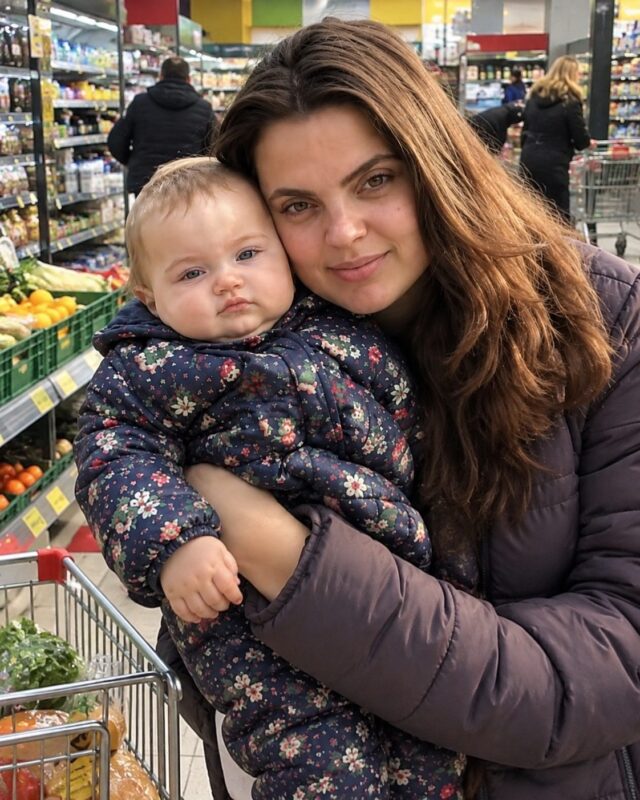
Right there, outside the supermarket.
For twelve years, I’d wanted to become a father.
And when my wife had finally been carrying our child, I’d abandoned her.
That evening, I went straight to my mother’s house.
She opened the door smiling.
“Daniel! What a lovely surprise!”
“Did Clara call you last year?”
Her smile vanished.
“Why are you asking?”
“Did she tell you she was pregnant?”
Silence.
“Answer me.”
My mother sat down.
“I was protecting you.”
Those five words destroyed something inside me.
“Protecting me from what? My wife? My son?”
“She was sick, Daniel! You would have spent your life caring for her!”
I stared at the woman who had raised me.
“You knew she had cancer?”
She looked away.
I didn’t shout.
I simply took my keys and left.
For the first time in my life, I understood that loving your mother doesn’t mean allowing her to destroy your family.
This morning, I visited Clara.
She lives in a tiny apartment above a bakery.
Lukas was sleeping in a secondhand crib beside the window.
Clara looked frightened when she opened the door.
“Daniel, what are you doing here?”
I handed her two bags of groceries.
Then I knelt beside the crib.
Our son opened his eyes.
My father’s eyes.
My eyes.
I touched his tiny hand.
And he wrapped his fingers around mine.
“I can’t undo what I did,” I whispered.
Clara stood silently behind me.
“I don’t expect you to forgive me. But I want to be his father. And I want to help you, whether you ever love me again or not.”
She began crying.
Then she said something I wasn’t prepared to hear.
“Daniel, there’s an envelope in the drawer.”
Inside were twelve letters.
Every single one was addressed to me.
She had written them during her pregnancy, during chemotherapy appointments, and on the night Lukas was born.
The final letter contained only three sentences:
“If I don’t survive, please tell our son that I loved him more than life itself.
Please don’t let him grow up believing his father didn’t want him.
And please, Daniel, teach him to listen when someone he loves says they have something important to tell him.”
I held that letter against my chest and wept.
Today, Clara is still fighting cancer.
We are not remarried.
She hasn’t forgiven me, and I haven’t asked her to pretend that everything is fine.
But every morning, I bring breakfast.
Every afternoon, I take her to treatment when she needs me.
And every evening, I hold our son while she rests.
Last night, as I was leaving, Clara called my name.
“Daniel?”
I turned.
She smiled faintly.
“Thank you for coming back.”
I looked at the woman I’d once promised to love in sickness and in health.
And finally understood something I’d learned far too late.
Sometimes the greatest tragedy isn’t losing someone you love.
It’s discovering that they were fighting for their life while you were busy blaming them for ruining yours.
And if Clara survives, I will spend the rest of my life making sure she never has to fight alone again. ❤️