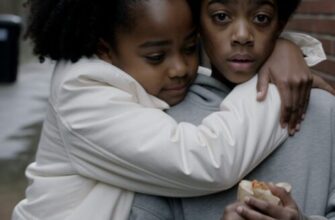
Her husband, Daniel, was the kind of man other women dreamed of marrying.
He never raised his voice at his wife, never returned home drunk, and never forgot their wedding anniversary.
Every morning, before leaving for work, he kissed Isabelle on the forehead.
Every evening, he played with their three children, even when he was exhausted.
When Isabelle fell ill, Daniel cooked, cleaned, and cared for the children without complaining.
“Some women are simply born lucky,” the neighbors whispered.
Isabelle always smiled when she heard those words.

She believed nothing could destroy their happiness.
But one rainy October evening, everything changed.
Daniel was driving home from the neighboring town when a truck suddenly crossed into his lane.
The collision was terrible.
His car was crushed against a roadside tree.
When Isabelle arrived at the hospital, doctors were fighting to save his life.
For three days, Daniel remained unconscious.
Isabelle sat beside his bed, holding his hand and praying.
On the fourth morning, he finally opened his eyes.
But the man who woke up was not the husband she remembered.
Daniel looked at his wife without smiling.
“Why are you here?” he whispered.
Isabelle burst into tears.
“Because I love you, silly. Where else would I be?”
He turned toward the window.
“Go home.”
She thought it was the medication talking.
But when Daniel returned home two weeks later, things became even worse.
He stopped kissing her.
He refused to eat dinner with the family.
He no longer played with the children.
Sometimes Isabelle found him sitting alone in the barn, staring at the wall.
Their youngest daughter, six-year-old Sophie, once approached him carrying a drawing.
“Daddy, look! I drew our family!”
Daniel barely glanced at the paper.
“Not now.”
The little girl walked away crying.
Isabelle followed him outside.
“What is happening to you? The children are frightened!”
Daniel clenched his fists.
“Maybe they should get used to living without me.”
Those words struck her harder than any slap.
Within days, the entire village was talking.
“I heard he wants a divorce,” one neighbor announced at the market.
“They say another woman visited him in the hospital,” whispered another.
“And yesterday he went to the bank alone. He’s probably hiding money before leaving.”
Isabelle tried to ignore the rumors.
Until she discovered a folded document in Daniel’s jacket.
It was a rental agreement for a small apartment in the city.
The lease would begin the following Monday.
Her hands trembled.
That evening, she placed the paper on the kitchen table.
“Are you leaving us?”
Daniel stared at the document.
For a long moment, he said nothing.
Then he answered quietly.
“Yes.”
Isabelle felt the room spinning.
“After fifteen years? After everything we’ve built?”
“It’s better this way.”
“Better for whom?”
He looked away.
“For all of you.”
That night, Isabelle cried until sunrise.
But the next morning, something unexpected happened.
Their eldest son, fourteen-year-old Lucas, entered the kitchen holding his father’s phone.

“Mom, I think Dad is hiding something.”
On the screen was a message from a doctor.
“Mr. Laurent, your latest examination confirms that the condition is progressing. Please contact the neurological department immediately.”
Isabelle read it twice.
Then she noticed another message.
“Your family needs to know the truth.”
Without waiting another minute, she drove to the hospital.
The doctor listened carefully before speaking.
“Your husband suffered a serious brain injury during the accident. Unfortunately, further examinations revealed a progressive neurological condition.”
Isabelle gripped the edge of the desk.
“Is he going to die?”
“We cannot predict exactly how his condition will develop. But he may experience worsening memory problems, emotional changes, and eventually need significant assistance.”
“Does he know?”
The doctor nodded.
“He asked us not to tell you.”
Isabelle covered her mouth.
Suddenly, everything made sense.
The silence.
The anger.
The apartment.
Daniel wasn’t leaving because he had stopped loving his family.
He was leaving because he was terrified of becoming their burden.
When Isabelle returned home, she found him packing a suitcase.
“Don’t,” she said.
Daniel froze.
“I know about the diagnosis.”
His face turned pale.
“You shouldn’t have found out.”
“Why didn’t you tell me?”
His voice broke.
“Because I remember how my mother suffered caring for my father. I watched her grow old before her time. I won’t do that to you.”
Tears streamed down Isabelle’s cheeks.
“So you decided to break our hearts instead?”
“I wanted you to remember me as I was.”
She stepped closer.
“Do you remember what you promised me on our wedding day?”
Daniel remained silent.
“In sickness and in health. In good times and bad.”
“Isabelle…”
“No. You don’t get to decide that you’re no longer worth loving.”
For the first time since the accident, Daniel began to cry.
Then a small voice came from the doorway.
“Daddy, are you really going away?”
Sophie stood there holding her family drawing.
Daniel knelt painfully before her.
“I thought you might be happier without me.”
The little girl threw her arms around his neck.
“But then who would be my daddy?”
He held her tightly and sobbed.
Three months later, the village women gathered again, this time outside Isabelle’s house.
They watched Daniel slowly walking through the garden, supported by his wife and children.
Some lowered their eyes in shame.
One neighbor finally whispered, “We thought he was abandoning them.”
Isabelle heard her.
She turned and answered calmly.
“Sometimes people push away those they love most because they’re afraid of being loved when they’re weak.”
Daniel reached for her hand.
His future remained uncertain. Some days were already harder than others.
But they had begun treatment, arranged regular medical care, and learned to face each new challenge together.
That evening, Isabelle found Sophie’s drawing hanging above their bed.
Under five smiling figures, the little girl had written:
“Our family stays together.”
And for the first time in months, Daniel smiled.