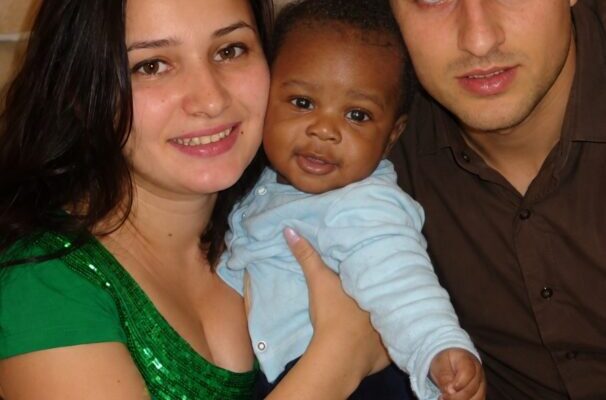
My husband stared at our newborn daughter for less than a minute before asking the question that nearly destroyed our marriage.
“Claire… whose baby is this?”
I thought the exhaustion had made me misunderstand him.
“What?”
Daniel stood beside my hospital bed, staring at the tiny girl sleeping against my chest.
Our daughter, Emma, had thick black hair, dark brown eyes and olive-toned skin.
Daniel was blond, blue-eyed and pale.
But so was I.
“Daniel, she was born twenty minutes ago.”
“I know what time she was born.”
“Then what are you asking?”
He didn’t answer.
He simply stared at Emma.
I should have realized then that something had already been planted in his mind.
Three weeks later, I discovered who had planted it.
His mother.
I walked into the kitchen and heard Daniel talking to her on speakerphone.
“I’m telling you,” Linda said, “that baby looks nothing like anyone in our family.”
“Mom…”
“Don’t be naive. Get a DNA test before you put your name on anything else.”
I froze in the hallway.
That evening, Daniel barely touched dinner.
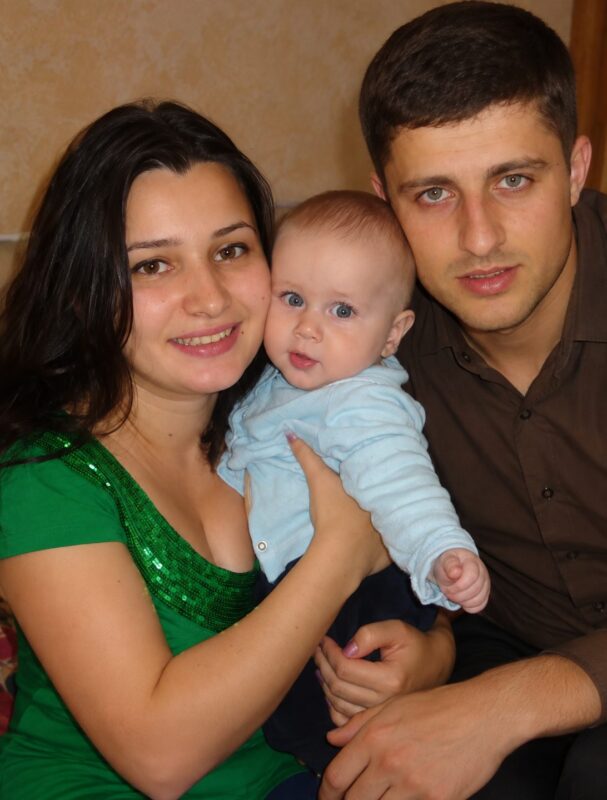
Finally, he pushed his plate away.
“I want a paternity test.”
I stared at him.
“Say that again.”
“I need to know Emma is mine.”
“After seven years of marriage?”
“It’s not about our marriage.”
I laughed bitterly.
“It is entirely about our marriage.”
He wouldn’t look at me.
Then he said something worse.
“If you have nothing to hide, you shouldn’t be afraid of the test.”
That sentence changed something inside me.
“Fine.”
His head snapped up.
“We’ll do it.”
“You’re agreeing?”
“Yes. But when it proves Emma is yours, don’t expect everything between us to magically go back to normal.”
The test was done two days later.
Daniel gave his sample.
Emma gave hers.
And because the clinic offered an expanded family DNA panel, I gave mine too.
Daniel asked why.
I looked straight at him.
“If we’re destroying our marriage with DNA tests, we might as well be thorough.”
Ten days later, the clinic called.
But they didn’t give me the results.
Instead, the receptionist said:
“Dr. Patterson would like you to come in tomorrow morning.”
“With my husband?”
“No.”
I frowned.
“Why?”
There was a pause.
“The doctor specifically requested that you come alone.”
Something about her voice frightened me.
The next morning, Dr. Patterson closed his office door and locked it.
That was when I knew this wasn’t normal.
He sat across from me holding a folder.
“Claire, before we discuss these results, I need you to answer a few questions.”
“Just tell me if Daniel is Emma’s father.”
He hesitated.
“No.”
The room seemed to tilt.
I actually laughed.
“That’s impossible.”
“Claire—”
“I’ve never cheated on my husband.”
“I believe you.”
“How can you possibly believe me when you just said—”
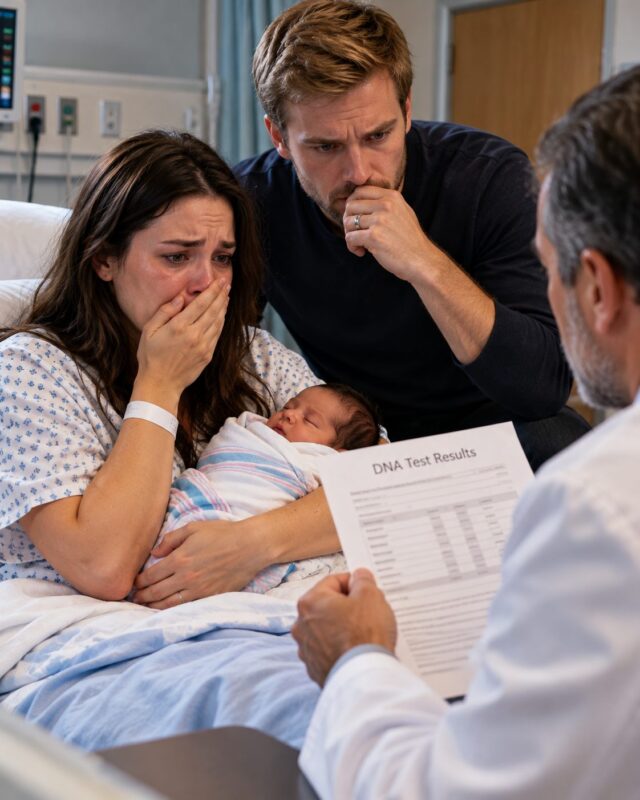
“Because you aren’t Emma’s biological mother either.”
Silence.
I stared at him.
“What?”
He turned the report toward me.
“Emma is genetically unrelated to both you and Daniel.”
My hands went numb.
“No. I gave birth to her.”
“I understand.”
“I held her.”
“I know.”
“I watched them put her bracelet on.”
Dr. Patterson remained quiet.
Then he asked:
“Was Emma ever taken away from you after delivery?”
I remembered immediately.
Six hours after she was born, a nurse had taken her for additional monitoring.
She was gone almost three hours.
I had been exhausted.
Daniel had gone home to shower.
When they returned Emma, I barely opened my eyes.
“Oh my God.”
Dr. Patterson leaned forward.
“We contacted the hospital before asking you to come in.”
My heart stopped.
“You what?”
“There was another baby girl born that evening.”
I couldn’t breathe.
“Another baby?”

“Same floor. Approximately forty minutes after Emma.”
I gripped the edge of the chair.
“Where is she?”
His expression changed.
And that terrified me more than anything else.
“That’s the problem.”
“What problem?”
“The other baby never went home.”
I stared at him.
“What do you mean?”
“She was transferred to neonatal intensive care shortly after birth. According to hospital records, she died the following morning.”
I couldn’t speak.
For several seconds, all I heard was the ticking clock on his wall.
Then I whispered:
“Are you telling me my daughter died?”
“We don’t know that.”
“Then what are you telling me?”
“That the records don’t make sense.”
He showed me copies of the hospital logs.
Emma’s identification number appeared twice.
Once beside the baby discharged to us.
And once beside the infant transferred to intensive care.
The second baby’s bracelet number had been manually corrected.
Someone had crossed it out.
My stomach turned.
“Who did this?”
“We don’t know.”
The hospital opened an investigation that afternoon.
Daniel was waiting when I returned home.
“Well?”
I placed the DNA results on the table.
He read the first page.
His expression hardened.
“I knew it.”
I will never forget those words.
Not because he said them.
Because he smiled when he did.
Just slightly.
As though being right mattered more than what it meant.
“Keep reading,” I said.
He frowned.
Then he reached my results.
His face drained of color.
“What is this?”
“I’m not Emma’s biological mother either.”
He stared at me.
I told him about the hospital records.
About the second baby.
About the NICU.
About the death certificate.
Daniel slowly sat down.
Then he whispered:
“Claire… what if the baby who died was ours?”
That question haunted me for eleven days.
Then detectives arrived at our house.
Not hospital administrators.
Detectives.
They asked us to sit down.
A woman named Detective Ruiz placed an old employee photograph on the table.
I recognized the woman instantly.
The nurse who had brought Emma back to me.
Her name was Rebecca Shaw.
“She disappeared two days after you left the hospital,” Detective Ruiz explained.
“Disappeared?”
“She resigned without notice.”
My skin went cold.
“Why?”
“We believe she switched the identification bracelets.”
Daniel leaned forward.
“Why would she do that?”
Detective Ruiz looked at me.
“Because Rebecca Shaw wasn’t just a nurse.”
She placed another photograph on the table.
This one was almost twenty-five years old.
A younger Rebecca stood beside a man.
My father.
I stopped breathing.
“What is this?”
My father had died four years earlier.
Detective Ruiz explained that Rebecca and my father had been involved before he married my mother.
Rebecca became pregnant.
The baby was stillborn.
Afterward, my father ended the relationship.
According to journals found in Rebecca’s former apartment, she blamed my family for destroying her life.
But that still didn’t explain Emma.
Until police found Rebecca.
She had been living under another name two states away.
And when detectives searched her house, they discovered a locked metal box containing hospital bracelets, copies of birth records and photographs of infants.
Emma wasn’t the first.
Rebecca admitted she had intentionally switched babies several times over nearly twenty years.
Sometimes out of resentment toward families she considered “too perfect.”
Sometimes because she believed certain mothers didn’t deserve their children.
But my case had been personal.
She knew exactly who I was when I entered the maternity ward.
She had recognized my maiden name.
She had seen my father in my face.
So when the opportunity came, she switched my daughter with another newborn.
The baby who died in intensive care…
was mine.
Her name had never truly been Emma.
Emma was the child sleeping upstairs in my house.
My biological daughter had lived for eleven hours.
I had never held her.
Never kissed her.
Never even known she existed.
I collapsed when they told me.
Daniel caught me before I hit the floor.
For weeks, I barely functioned.
And then came another nightmare.
Emma’s biological parents were found.
Their names were Michael and Sarah Coleman.
For months, they had believed their daughter had died shortly after birth.
Now they learned she was alive.
Living with us.
Our first meeting was unbearable.
Sarah entered the room, saw Emma in my arms and began sobbing.
“My baby.”
I instinctively held Emma tighter.
Then I hated myself for doing it.
Because Sarah wasn’t trying to steal my daughter.
She was looking at the child she had mourned.
Daniel stood behind me.
Michael stood behind Sarah.
Four adults.
One baby.
And a crime none of us had committed.
Eventually, after months of court hearings, counseling and negotiations, we created an arrangement that allowed Emma to know both families.
But my marriage never recovered.
Not because Emma wasn’t biologically Daniel’s.
Not because of the hospital.
Because I couldn’t forget his smile when he first read that negative paternity result.
“I knew it.”
Two words.
Two words that told me he had been prepared to believe the worst about me.
A year later, I filed for divorce.
Daniel cried.
He apologized.
He begged me to reconsider.
But trust doesn’t always die dramatically.
Sometimes it dies quietly at a kitchen table while your husband holds a DNA report and looks relieved that you might have betrayed him.
Emma is five now.
She knows Sarah and Michael.
She knows Daniel.
And she knows me as Mom.
Someday, when she’s old enough, I’ll tell her everything.
I’ll tell her about the nurse.
The bracelets.
The investigation.
And the little girl who lived only eleven hours but changed all of our lives.
But there is one thing I’ll never tell Emma.
I’ll never tell her that the DNA test meant to prove she didn’t belong in our family was the very thing that saved her identity.
Daniel demanded that test because our daughter “looked nothing like him.”
He was right.
She wasn’t his.
She wasn’t mine.
But the most horrifying truth wasn’t hidden inside the DNA results.
It was hidden in a hospital record for a baby declared dead five years ago.
A baby who carried Emma’s name.
And should have carried mine.