“Mom, you’ve worked your whole life. Now it’s our turn to take care of you,” she whispered.
I believed her.
For forty-two years, I had worked as a nurse. I raised two children, buried my husband, paid off our little house, and saved every dollar I could. At sixty-seven, I wanted nothing extraordinary. Just a peaceful retirement, a small garden, and enough money to live without asking anyone for help.
But three weeks after my retirement party, my daughter, Melissa, arrived with tears in her eyes.
“Mom, can I borrow your pension card for just one month? My friend Jessica lost her job, and she’s about to be evicted. I promised to help her until she finds work.”
I hesitated.
“Melissa, that’s my only income.”
“I know, Mom. But you always taught me to help people. It’s only one month. I promise.”
She looked so much like the little girl who used to climb into my lap when she was frightened.
I handed her the card.

That was the biggest mistake of my life.
The first month passed quietly.
Melissa brought groceries twice and assured me that Jessica was attending interviews.
The second month, I asked for my card back.
“Just another couple of weeks, Mom. Jessica finally found something, but she hasn’t received her first paycheck.”
By the third month, Melissa stopped answering my calls.
Then one Thursday morning, I went to the pharmacy to collect my blood pressure medication.
My payment was declined.
I called the bank.
The woman on the phone sounded uncomfortable.
“Mrs. Bennett, your pension account has been receiving deposits, but the funds are being withdrawn almost immediately.”
My stomach tightened.
“How much is left?”
“Fourteen dollars and eighty-six cents.”
I sat down on a bench outside the pharmacy.
Three months of pension payments. Gone.
But the real shock came when I visited the bank in person.
The manager, Mr. Collins, invited me into his office.
“Mrs. Bennett, there is something else you should know.”
He turned his computer screen toward me.
There were transactions I didn’t recognize. Payments to a furniture store. A luxury hotel. A car dealership.
And then I saw a recurring payment marked “Oakwood Senior Residence.”
“What is that?” I asked.
Mr. Collins hesitated.

“It’s an assisted-living facility.”
I stared at him.
“Why would my daughter be paying for a nursing home with my pension?”
He looked at me carefully.
“Perhaps you should speak with your daughter.”
I left the bank shaking.
That evening, I drove to Melissa’s house.
Her husband, Daniel, opened the door.
“Oh, Margaret! We weren’t expecting you.”
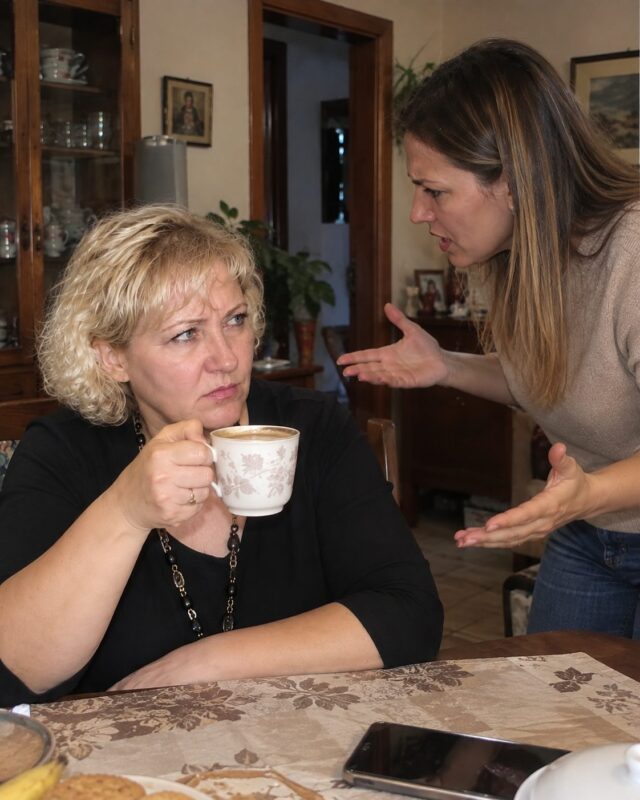
From the dining room, I heard Melissa laughing.
I walked inside.
Spread across the table were brochures for luxury kitchens, flooring samples, and a thick folder with my name written across the front.
Melissa jumped to her feet.
“Mom! Why didn’t you call?”
I pointed at the folder.
“What’s that?”
Her face changed.
“Nothing. Just paperwork.”
I opened it before she could stop me.
Inside were copies of my identification, my pension statements, and photographs of my house.
Then I found a document titled:
“Residential Property Transfer Agreement.”
My address was printed underneath.
The proposed new owner was Melissa Bennett.
For a moment, I couldn’t breathe.
“Melissa,” I whispered, “why is my house being transferred into your name?”
She glanced at Daniel.
Then she said something I will never forget.
“Mom, you’re getting older. We need to think about what’s best for everyone.”
“Everyone?”
“You live alone in that big house. You don’t need all that space.”
I looked at the nursing home brochure.
“And this?”
Melissa sighed impatiently.
“It’s a beautiful facility. They have activities, nurses, everything. You’d be comfortable.”
“And you would get my house?”
She didn’t answer.
Daniel suddenly spoke.
“Margaret, I told her this was wrong.”
Melissa spun toward him.
“Stay out of it!”
He looked directly at me.
“She told me you’d agreed to move.”
My daughter slammed her hand on the table.
“Because she should agree! I’ve spent my whole life worrying about her!”
I almost laughed.
“Worrying about me? You took my pension, Melissa. You left me without money for medication.”
Her eyes narrowed.
“I was going to pay it back.”
“With what?”
Silence.
Then Daniel opened a drawer and pulled out a small envelope.
“Margaret, you need to see this.”
Inside was a letter addressed to a lawyer.
Melissa had requested information about obtaining legal authority to manage my finances and sell my property if I was declared incapable of handling my affairs.
Attached was a handwritten note.
“Mother is becoming forgetful. She makes poor financial decisions. We need to act before she changes her mind.”
I recognized my daughter’s handwriting.
My hands went cold.
“You were going to tell people I couldn’t take care of myself?”
Melissa started crying.
“Mom, please understand. Daniel’s business is failing. We owe almost ninety thousand dollars. If we sell your house, we can start over.”
There it was.
Not Jessica.
Not charity.
Not concern for my health.
Debt.
And my home was supposed to pay for it.
I placed the papers back on the table.
“Where is my pension card?”
Melissa wiped her face.
“Mom—”
“Now.”
She retrieved it from her purse.
I took it and walked toward the door.
Then she shouted, “After everything I’ve done for you, you’re really going to destroy this family over money?”
I turned around.
“No, Melissa. You were willing to destroy your mother for money.”
The next morning, I went straight to the bank, blocked the card, changed my account access, and requested an investigation into the unauthorized transactions. I also hired a lawyer to protect my home.
Two weeks later, Daniel came to visit.
He told me he had moved out.
Then he handed me a sealed envelope containing copies of messages Melissa had sent to Jessica.
Jessica hadn’t lost her job.
She hadn’t borrowed a single dollar.
In one message, my daughter had written:
“Once Mom is in the residence, the house is ours. She’ll be upset for a while, but she’ll get over it.”
I read those words three times.
Then I folded the paper and put it away.
Six months have passed.
Melissa still calls, but I haven’t answered.
My son, Michael, visits every Sunday. He helps with the garden, although I remind him that I can still pull my own weeds.
Last Sunday, he asked me something.
“Mom, do you think you’ll ever forgive her?”
I looked at the roses blooming beside the porch.
“I don’t know,” I said. “Maybe someday.”
Then I added something I wish I had understood years earlier.
“Forgiveness doesn’t mean giving someone another chance to rob you.”
That evening, I sat in my favorite chair with a cup of tea and watched the sunset through the window of the house my husband and I had worked forty years to own.
For the first time since retiring, I felt safe.
And I finally understood the cruelest truth of all.
Sometimes the person who knows exactly where you keep your valuables is the same person who knows exactly how to break your heart.