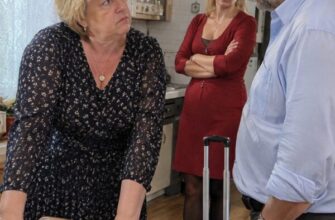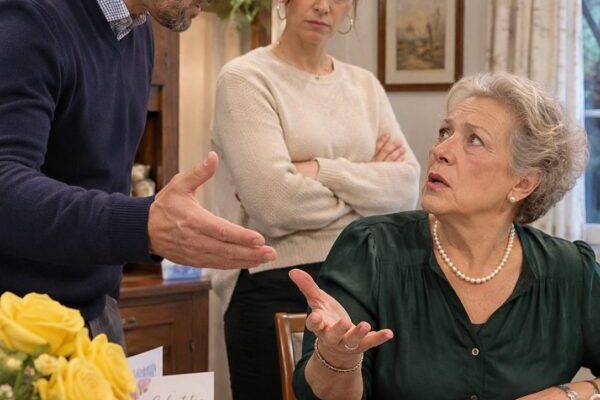
“Mom, you’re seventy-two years old. What do you need a five-bedroom house for? Just sign the papers, and Jessica and I will find you a wonderful senior living community. You won’t have to worry about anything anymore.”
My son, Michael, said those words on my seventy-second birthday.
In front of him sat the apple pie I had baked that morning. Beside the coffee cups were a bouquet of yellow roses, a birthday card, and a thick navy-blue folder.
Apparently, the folder was my real birthday present.
“Michael, I only asked whether you wanted another cup of coffee,” I replied calmly. “I didn’t ask whether you wanted my house.”
My daughter-in-law, Jessica, set down her cup.
“Margaret, please don’t misunderstand. Nobody is trying to take anything away from you. We just want you to be comfortable.”
I looked at the folder.
“Then what’s inside?”
“A sensible solution,” Jessica answered. “You’ve said yourself that taking care of the yard is getting difficult.”
“I said I was going to hire someone to trim the hedges.”
Michael sighed.
“Mom, we’re only thinking about what’s best for you.”
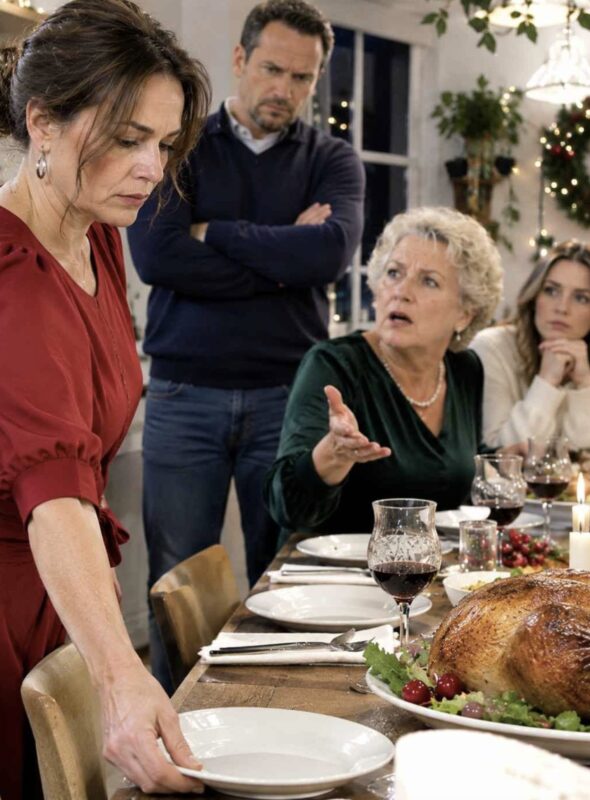
I had heard that sentence so many times over the past six months that it had begun to sound more like a warning than an expression of love.
My name is Margaret Collins. I’m seventy-two years old, and I live in a quiet neighborhood outside Columbus, Ohio.
My late husband, Robert, and I bought our house forty years ago.
Michael was only three at the time.
We weren’t wealthy, but we had dreams.
Robert worked as an electrician. I was a receptionist at a medical clinic, and some evenings I took sewing jobs to earn extra money.
When we moved in, the house was far from perfect.
The living room had worn carpeting, the kitchen cabinets were outdated, and the garage roof leaked whenever it rained heavily.
But it was ours.
Robert repaired things after work, and I saved every dollar I could.
We rarely took expensive vacations because there was always something that needed fixing.
When Michael started elementary school, we finally had enough money to renovate his bedroom.
On his eighteenth birthday, his friends filled the backyard while Robert stood beside the grill all evening.
Seven years ago, my husband passed away.
I stayed in our home.
I had never imagined waking up anywhere else.
At first, Michael seemed to understand.
Or at least I believed he did.
He was now forty-six, working as a sales manager. He lived with Jessica and their sixteen-year-old daughter, Emily, in a townhouse about twenty minutes away.
Jessica was forty-three and worked part-time in real estate.
We used to be close.
She brought me flowers on my birthdays. I helped care for Emily when she was little. We often had Sunday dinner together.
But six months earlier, something had changed.
It started with harmless-sounding remarks.
“Margaret, those stairs could become dangerous.”
Then:
“You really should start thinking about where you’ll live when you’re older.”
And eventually:
“It’s such a shame for one person to live in a house this big.”
I tried not to take offense.
Of course, I wasn’t forty anymore.
Sometimes my knees hurt after gardening. I hired someone to clean the upstairs windows, and occasionally I had heavy groceries delivered.
But I still cooked for myself, drove my own car, attended water aerobics twice a week, and paid every bill with my own money.
I didn’t need assisted living.
And I certainly didn’t need anyone making decisions for me.
On my birthday, I had expected something entirely different.
I had covered the dining table with the white linen tablecloth Robert gave me on our twenty-fifth wedding anniversary.
I made chicken casserole, mashed potatoes, green beans, and Michael’s favorite apple pie.
Emily had sent a handmade card because she had a school event that afternoon.
Michael and Jessica arrived shortly after three.
My son brought roses.
My daughter-in-law brought the navy-blue folder.
Within twenty minutes, several documents were spread across my dining table.
“We’ve already looked at some wonderful places,” Jessica announced.
She pulled out a colorful brochure.
On the cover, two smiling seniors sat in a beautiful garden.
“Look, Margaret. Lovely grounds, activities, meals, and staff available around the clock.”
“I don’t need someone watching me around the clock.”
“Not yet,” Michael interrupted.
I looked at him.
“What does that mean?”
“Mom, don’t get upset. We have to think about the future.”
Jessica slid a document toward me.
“If you transferred the house to Michael, we could arrange everything much more easily.”
“And what would you do with my house?”
They exchanged a quick glance.
Finally, Michael answered.
“We’d probably move in.”
I stared at him.
“And your townhouse?”
“We’d sell it. We still owe quite a bit on the mortgage.”
In that moment, I understood.
This wasn’t about the stairs.
It wasn’t about my knees.
And it wasn’t about my health.
It was about my house.
“What about Emily?” I asked.
“She’d love having a bigger backyard,” Jessica replied.
I looked out the window at the old maple tree.
Robert had planted it when Michael was ten.
“And where would I live?”
“We’d take care of that, Mom.”
“Before or after I signed?”
Michael frowned.
“Mom, you’re making this unnecessarily complicated.”
I picked up the documents.
They had already been prepared.
The first page was a draft deed.
Several pages of legal language followed.
“You’ve already spoken to someone about transferring my property?”
“We’ve made some inquiries,” Jessica answered.
“And when exactly were you expecting me to sign?”
“As soon as possible. Maybe next week.”
I turned another page.
“Before making all these plans, did either of you ever ask what I wanted?”
Neither answered.
I placed the folder beside my plate.
“Then I’ll read everything carefully before we discuss it again.”
Michael looked relieved.
“Mom, we’ve put a lot of work into this.”
“I can see that.”
“Then why are you acting like we’ve done something wrong?”
I looked directly into my son’s eyes.
“Because you came to my birthday party to tell me to move out of my own home.”
Jessica shook her head.
“Margaret, you’re misunderstanding us.”
“No, Jessica. I’m repeating what you said.”
After that, the coffee went cold.

Michael stood and walked to the window.
“Do you even know what this property is worth now?” he asked.
“No.”
“Probably close to four hundred thousand dollars. Maybe more.”
“And?”
He turned around.
“It’s a shame to have that much money tied up in a house that’s barely being used.”
I almost laughed.
Barely being used.
For forty years, we had lived, worked, cried, celebrated birthdays, and raised our son inside those walls.
But to Michael, it was now simply an underused asset.
“Michael, if your father were sitting here, would you say the same thing to him?”
He looked away.
Jessica picked up her purse.
“We should probably go. Margaret clearly isn’t ready to discuss this today.”
I didn’t stop them.
Before leaving, Michael turned around.
“Just think about it, Mom.”
“I will.”
He smiled with relief.
“Good.”
When the door closed, I returned to the table.
The navy-blue folder was still there.
I opened it and read every page from beginning to end.
Then I walked into Robert’s old study and took out a faded green folder.
Across the front, in my husband’s handwriting, were the words:
House and Important Papers.
I hadn’t examined it carefully in years.
At the bottom, I found a letter Robert had written a few months before his death.
It wasn’t long.
In it, he asked me to stay in our home for as long as I wanted.
And never to believe I had to leave my own home simply to make someone else’s life easier.
I read those words three times.
Then I sat at his old desk and cried.
Not because I was weak.
But because I suddenly realized how hard I’d been trying, for months, not to become a burden to my own son.
The following Monday, I called Linda.
We’d been friends for more than thirty years.
She had been an elementary school teacher and had faced several difficult decisions after her husband died.
“Linda, do you know a good estate-planning attorney?”
She recommended a law office in Columbus.
Three days later, I sat there with the blue folder, the green folder, and Robert’s letter.
The attorney was a calm woman in her fifties named Sarah Mitchell.
She listened carefully.
Then she asked:
“Mrs. Collins, what do you actually want?”
I answered immediately.
“I want to stay in my home.”
“Good. Then that’s where we’ll begin.”
Sarah explained that I had absolutely no obligation to give my house to my son.
She also told me that transferring real estate in Ohio involved specific legal requirements, and that any deed needed to be prepared and recorded correctly.
I felt an enormous sense of relief.
Not because I’d believed Michael could simply throw me out the next day.
But because someone was finally speaking to me as an adult who still had the right to make decisions about her own life.
“What if I need help someday?” I asked.
“There are several options. That doesn’t mean you have to move out now.”
We also discussed estate planning, powers of attorney, and how I could arrange for someone to handle certain matters if I ever became unable to manage them myself.
I’d always assumed Michael would be the person to help me.
Now I wasn’t so sure.
“I’d like my son to inherit this house someday,” I said.
“But I don’t want him pushing me out before I die.”
Sarah nodded.
“Those are two very different things.”
Over the next several days, I thought carefully.
I spoke with Linda, reviewed the documents, and asked myself what I really wanted.
Eventually, I decided I was willing to consider transferring the house to Michael.
But only if my rights were properly protected.
Sarah explained how a deed might reserve a life estate, allowing me to retain legally defined rights to use and occupy the property during my lifetime.
She emphasized that the exact arrangement would have to comply with Ohio law and that we should carefully consider taxes, expenses, and the consequences of giving away ownership.
We also discussed maintenance responsibilities.
“There’s one thing I want to emphasize,” Sarah said. “Don’t transfer your house just to teach your son a lesson. Only do it if it’s truly what you want.”
I promised not to rush.
Only after several conversations did we prepare a new draft.
Two weeks after my birthday, I invited Michael and Jessica over again.
This time, I didn’t bake a pie.
I made coffee.
“I’ve thought about it,” I began.
Michael leaned forward.
“And?”
“I’m willing to consider transferring the house.”
Jessica smiled.
“See, Margaret? I knew we could work this out.”
“But I have conditions.”
Michael nodded.
“Of course, Mom.”
I handed him a summary of the draft.
“I want to retain a life estate.”
“Obviously.”
“And we need to specify exactly who pays certain expenses and handles repairs.”
Jessica frowned.
“What expenses?”
“My attorney will explain everything.”
Michael skimmed the paper.
“Can’t we talk about those little details later?”
“No. Everything needs to be clear before I sign.”
We scheduled a meeting at Sarah’s office to review the draft.
The night before, Michael called.
“Mom, you haven’t changed anything else, have you?”
“You received the complete draft.”
“Yeah, yeah. Jessica has it.”
“Then read it carefully.”
He laughed.
“Mom, you’re acting like we’re buying a corporation.”
I didn’t answer.
Because I knew there was one condition near the end of the document that they apparently hadn’t understood.
On Friday morning, all three of us sat in my attorney’s office.
Michael wore a dark blue jacket.
Jessica had chosen a cream-colored blouse and tied her hair neatly back.
She looked almost festive.
Each of us had a copy of the draft.
Sarah greeted us and explained how the meeting would proceed.
“We’re going to review all the terms. If anything is unclear, please stop me.”
Michael nodded impatiently.
Sarah began.
First, she reviewed the property description.
Then the proposed transfer terms.
After that, she moved to the life-estate provision.
“The grantor, Margaret Collins, would reserve a life estate in the entire property, subject to the terms set out in the deed.”
Michael glanced at his watch.
Jessica straightened her sleeve.
When Sarah explained that the life estate would preserve my right to occupy and use the house, Jessica suddenly raised her head.
“Wait a minute. Does that mean Margaret could still live there?”
“Yes,” Sarah replied.
“But we were planning to move in.”
“Then you would have to respect Margaret’s rights. You couldn’t simply treat the house as vacant and take possession for your own use.”
Michael waved his hand.
“We can work that out.”
Sarah continued.
She explained the provisions concerning expenses and repairs.
Finally, she reached the last section of the draft.
She paused.
“I’d like everyone to listen carefully to this part.”
Then she read slowly:
“The parties acknowledge that the proposed transfer does not obligate Margaret Collins to vacate the residence. Margaret would retain the right to occupy and use the property under the reserved life estate. No provision of this transfer requires Margaret to relocate to assisted living, a retirement community, or any other residential facility.”
Jessica turned pale.
“What do you mean she doesn’t have to move?”
Sarah looked at her.
“Exactly that. There’s no such obligation in this draft.”
Michael jumped to his feet.
“But then how are we supposed to move in?”
“You would have to respect your mother’s rights,” Sarah answered calmly.
Jessica began flipping through the pages nervously.
“And we’d still be responsible for certain expenses?”
“If you agree to those proposed terms, yes.”
Michael stared at me.
“Mom, what have you done?!”
I placed both hands on the table.
“I’ve made sure you can’t get my house just so you can send me somewhere else.”
“But that was the whole point of the plan!”
The instant those words left his mouth, the room fell completely silent.
Even Jessica turned to stare at her husband.
Sarah waited a moment.
Then she asked evenly:
“Michael, do you still wish to proceed with the proposed transfer under these conditions?”
Michael opened his mouth.
Then closed it.
Finally, he said:
“This isn’t what we had in mind.”
I nodded.
“That’s what I’ve finally understood, too.”
Jessica leaned toward me.
“Margaret, we were only trying to find a solution that worked for everyone.”
“Everyone?”
I looked at her.
“You’d move into my house, sell yours, and send me to a place I never chose and don’t need.”
“That’s not fair,” she protested.
“Then tell me where I was supposed to live under your original plan.”
Neither answered.
I turned to Sarah.
“I don’t want to proceed with the transfer.”
Michael looked up sharply.
“What?”
“I’d like to end the meeting.”
Sarah nodded.
“Of course. Any transfer must be your voluntary decision.”
Jessica pushed her chair back.
“Unbelievable.”
Michael stared at me.
“You brought us here when you weren’t even planning to sign?”
“I was willing to discuss transferring the house,” I replied. “But I won’t sign if you’re agreeing to the conditions only because you think you can persuade me to move out later.”
“We’ve wasted so much time on this!”
“I’ve spent forty years building a life in that house.”
He fell silent.
Then he stood.
“I need some air.”
Jessica followed him outside.
Through the glass door, I could see them arguing.
Michael gestured wildly.
Jessica gripped her phone.
I remained seated.
Sarah moved the documents aside.
“Margaret, may I ask one more question?”
“Of course.”
“What do you want to do now?”
I took a deep breath.
“Go home.”
She smiled faintly.
“That sounds like a good place to start.”
I never signed the deed.
No ownership transfer took place.
The house remained mine.
When I walked out of the office, Michael and Jessica were standing beside their car.
My son approached me.
“Mom, can we at least talk?”
I stopped.
“We can. But not today.”
“You don’t understand the pressure we’re under.”
For the first time, his voice didn’t sound angry.
It sounded exhausted.
I looked at him.
“What pressure?”
He glanced at Jessica.
She looked away.
“We’re having money problems,” Michael finally admitted.
“What kind of problems?”
He was quiet for a moment.
Then he explained that they owed much more on their townhouse than I’d realized.
Two years earlier, they’d borrowed additional money to renovate the kitchen and bathrooms.
Then their car had needed expensive repairs.
Jessica had worked fewer hours for several months while her mother was ill.
Their expenses had gotten out of control.
“We thought that if we got your house, we could sell ours,” Michael said.
“And what about me?”
He lowered his eyes.
“We’d have found somewhere nice for you.”
“Did you ever ask whether I wanted that?”
He shook his head.
A sharp pain went through me.
Not because of the money.
But because my own son had treated my life as something that could be moved aside like furniture to make his life easier.
“Michael,” I said, “I might have helped you find a solution.”
He looked up.
“Really?”
“Yes. But not by giving up my home.”
Jessica stepped closer.
“We never meant to hurt you, Margaret.”
I looked at her.
“Then you shouldn’t have brought prepared legal papers to my birthday party.”
She lowered her head.
We parted without hugging.
When I got home, I set my purse on the small table in the hallway.
The house was quiet.
Afternoon sunlight fell across the old wooden kitchen table.
I put the kettle on and walked into the backyard.
The maple tree was especially beautiful that year.
Robert used to say that a strong tree wasn’t measured by the shade it gave, but by how deeply its roots reached into the earth.
I smiled.
A week later, Emily called me.
My granddaughter was sixteen.
“Grandma, can I come over Saturday?”
“Of course, sweetheart.”
She arrived on her bicycle.
We baked apple muffins together.
Only after we sat at the kitchen table did she ask:
“Grandma, is it true Dad wanted your house?”
I set down the knife.
“He wanted to talk about its future.”
Emily looked at me seriously.
“Mom and Dad have been arguing.”
“I’m sorry to hear that.”
“Dad says you’re stubborn.”
I smiled sadly.
“Maybe I am sometimes.”
Emily shook her head.
“I think you should get to live here for as long as you want.”
I took her hand.
“Thank you, sweetheart.”
Then she said something I thought about for a long time.
“Dad once told me he was happiest when he was a kid living in this house.”
I looked out the window.
“I believe that.”
“Then why does he want you to leave?”
I didn’t know how to answer.
Over the following weeks, Michael rarely called.
I used that time to take care of things I’d been putting off for years.
I requested an estimate for a stairlift, even though I didn’t need one yet.
I hired a landscaper to trim the hedges twice a year.
And I researched home-care services in case I ever needed help.
I also began organizing my important documents and estate plan with professional guidance.
For certain future arrangements, I chose Linda as someone I trusted to help carry out my wishes.
Not to punish my son.
But because I needed someone who understood what I wanted and respected it.
Several weeks later, Michael appeared at my front door.
Alone.
He didn’t have a folder.
Only a small paper bag from the bakery.
“I brought your favorite cinnamon rolls,” he said.
“From Miller’s Bakery?”
He nodded.
I let him inside.
We sat at the same table where he’d announced on my birthday that I no longer needed my home.
For a long time, neither of us spoke.
Finally, Michael broke the silence.
“Mom, I’ve been a complete idiot.”
I looked at him.
“Yes, you have.”
He smiled slightly, but his eyes remained serious.
“I thought we could solve two problems at once.”
“Your debt and what you thought was my problem with getting older.”
He nodded.
“I didn’t understand how much I was hurting you.”
I said nothing.
“And I forgot that this isn’t just a house.”
He looked around.
“Dad installed those wooden shelves himself.”
“Yes, he did.”
“And that mark on the doorframe? I made it when I crashed my bike.”
“I remember.”
He ran his hand across the table.
“I was so focused on finding a way out for my family that I didn’t even notice what I was asking you to sacrifice.”
For the first time in weeks, I felt that my son was truly listening.
“Michael,” I said, “I can’t solve every problem for you for the rest of my life.”
“I know.”
“But I’m still your mother. If you’re struggling, you can talk to me.”
He nodded.
“Without making decisions for you.”
“Exactly.”
We drank coffee together.
Then he asked:
“Do you think you can ever forgive me?”
I looked at him for a long moment.
“I want to. But trust has to be rebuilt.”
He lowered his head.
“I understand.”
When he left, he hugged me sincerely for the first time in months.
Jessica took longer.
At first, she sent a short text message.
Later, she came to see me in person.
We didn’t begin by discussing the house.
We talked about Emily, her work, and the difficulties they’d been facing over the past several months.
Finally, Jessica said:
“Margaret, I treated you like a problem that needed to be solved.”
I nodded.
“That’s exactly how it felt.”
She looked at me.
“I’m sorry.”
I accepted her apology.
But I made it clear that our relationship had to change.
No more decisions about my life behind my back.
No more contracts prepared without consulting me.
And no more conversations about retirement communities until I was the one who wanted to discuss them.
Six months later, we celebrated Emily’s seventeenth birthday in my backyard.
Michael handled the grill.
Jessica brought potato salad.
Emily invited several friends, and we set up two long tables beneath the maple tree.
I sat on the porch, watching my family.
Everything wasn’t the same as before.
Maybe it never would be.
But we had begun speaking more honestly.
After the guests left, Michael sat beside me.
“Mom, can I ask you something?”
“Of course.”
“What do you think you’ll eventually do with the house?”
I turned toward him.
He quickly raised his hands.
“Not now, Mom. I mean someday, a long time from now.”
I smiled.
“I’ll decide when the time comes.”
He nodded.
“Fair enough.”
Then he looked at the maple tree.
“Remember when Dad made me help plant that?”
I laughed.
“You complained the entire time.”
“And it’s still here.”
We sat quietly for a moment.
Then Michael said softly:
“I’m glad you’re still here, Mom.”
I took his hand.
“So am I.”
Later, after everyone had gone, I carried the last dishes into the kitchen.
On the little table in the hallway was the birthday card Emily had made for me months earlier.
In slightly crooked handwriting, she’d written:
“Grandma, I hope you always have a place where you’re happy.”
I placed the card beside Robert’s photograph.
And as the wind stirred the branches of our old maple tree, I realized that the most important decision of my life hadn’t happened in my attorney’s office that day.
It had happened on my seventy-second birthday.
The moment I understood that I didn’t have to prove to anyone why I wanted to continue living in my own home.
It was my house.
My life.
And as long as I could make my own decisions, the final word about that life would belong to me.